

Crossing the Strait of Gibraltar by boat is one of the most memorable ways to arrive in Morocco – Europe disappears behind you and the white city of Tangier rises from the sea. The fastest ferry from Spain to Morocco takes about an hour, and there are dozens of sailings every day. This guide explains every route, the two Tangier ports, typical prices and what to know if you travel with a car.
Information as of November 2026. Timetables and operators change with the season – always confirm with the ferry company before booking.
Ferry Routes from Spain to Morocco at a Glance
- Tarifa – Tangier Ville: about 1 hour – Baleària, AML – best for foot passengers who want to arrive in central Tangier.
- Algeciras – Tanger Med: about 1 h 30 min – several operators – most frequent route, best with a car.
- Motril – Tanger Med: about 8 hours – Baleària – handy from Granada and eastern Andalusia.
- Barcelona – Tanger Med: about 30–35 hours – GNV – for travelers from Catalonia or northern Spain with a vehicle.
- Almería – Nador: overnight crossings – for eastern Morocco.
Longer routes also connect Morocco with Italy and France (for example GNV from Genoa), useful for road-trippers coming from further away.
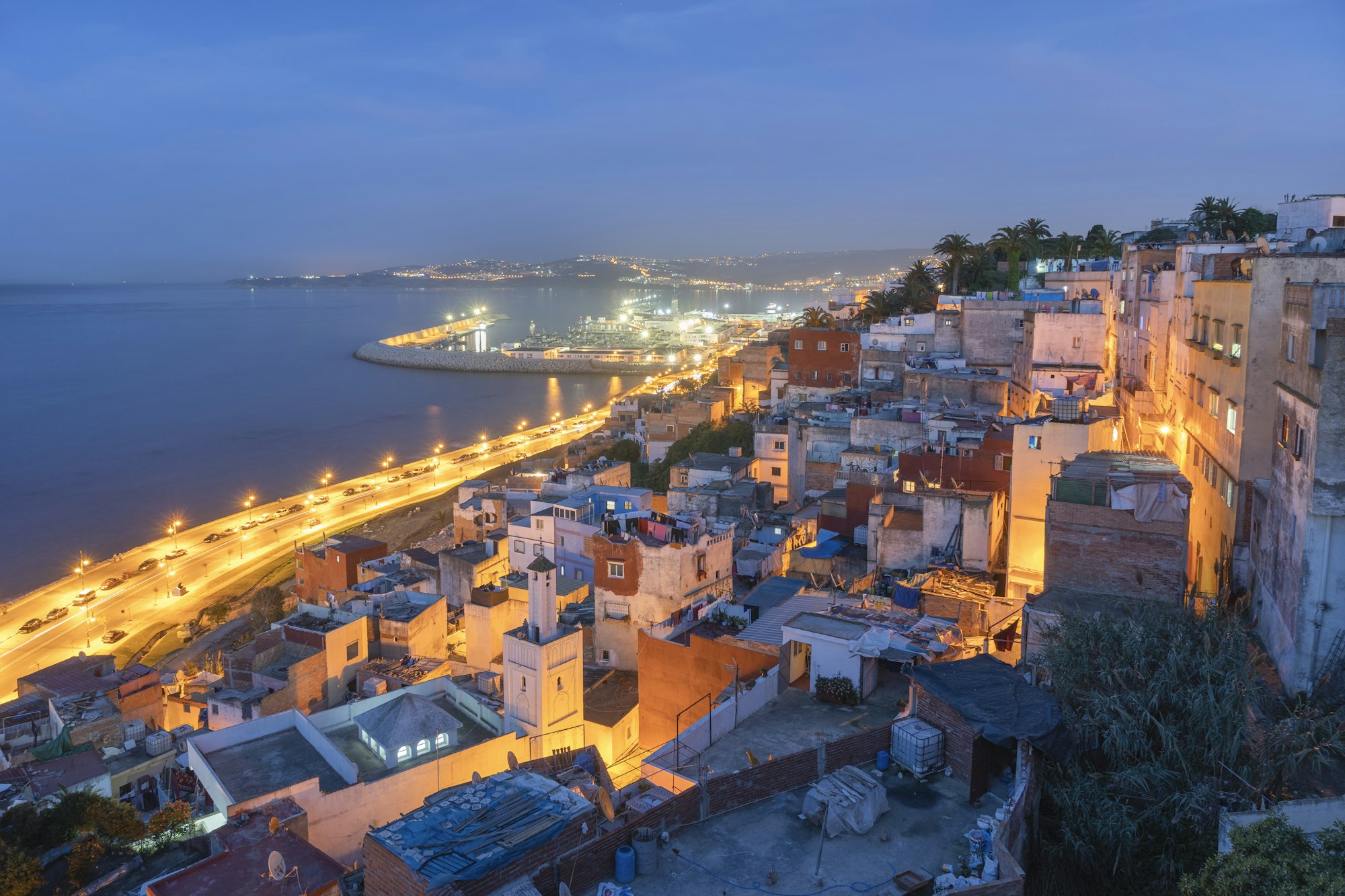
Tangier Ville or Tanger Med: Which Port?
Tangier has two passenger ports, and choosing the right one saves time:
- Tangier Ville (Tangier City Port): right next to the medina. Fast ferries from Tarifa arrive here – perfect if you travel on foot.
- Tanger Med: a huge modern port about 45 km east of the city, connected by motorway. Ferries from Algeciras, Motril and Barcelona arrive here. Ideal if you have a car or continue straight to Chefchaouen and Fes.
Tarifa – Tangier Ville: The Fastest Crossing
- Duration: around 1 hour (about 32 km).
- Frequency: roughly 5–15 departures a day depending on season.
- Price: from around €40 per foot passenger, one way.
- Tip: on many Strait ferries, Moroccan passport control takes place on board – look for the police desk as soon as you embark.
Spending a day or two in the city? See our guide to the best things to do in Tangier.

Algeciras – Tanger Med: The Most Frequent Route
- Duration: about 1 h 30 min.
- Frequency: up to around 40 departures a day in summer and 20–30 the rest of the year.
- Price: from around €20 per foot passenger; with a car, from roughly €120 for two adults.
- Check-in: arrive well in advance, especially with a vehicle.
Other Routes
Motril – Tanger Med
A daily Baleària route of about 8 hours, convenient from Granada, Málaga province or Almería.
Barcelona – Tanger Med
GNV sails a couple of times a week (about 30–35 hours), with seats and cabins – ideal if you want to bring your car without driving the length of Spain.
Almería – Nador
Arrives in Nador in eastern Morocco – a good option for the Oriental region or for heading south towards Merzouga via the east.

Is There a Ferry from the Canary Islands to Morocco?
Not at the moment. A Fuerteventura – Tarfaya line operated briefly in 2007–2008, and there have been repeated plans to reopen it, but there is currently no regular passenger service. There is also no regular passenger ferry to Agadir yet, although new routes (such as Cádiz – Agadir) have been announced – check their status before planning. For now, the easiest way from the Canaries is to fly to Laayoune, Agadir, Marrakech or Casablanca. See our guide to airports in Morocco.
Taking Your Car to Morocco by Ferry
- Documents: valid passport, driving licence, vehicle registration and insurance valid in Morocco (green card covering Morocco or insurance bought at the border).
- Temporary vehicle import: declared at Moroccan customs on arrival – keep the paper until you leave.
- Summer traffic (Operation Marhaba): from mid-June to mid-September, ports are very busy. Book ahead and avoid peak weekends.
- Driving: remote desert tracks require experience – read our 4×4 guide.
Practical Tips
- Passport: required for all foreign visitors. Many nationalities (EU, UK, US, Canada, Australia…) need no visa for up to 90 days – see our visa guide.
- Time zone: since 20 September 2026 Morocco uses GMT all year – one hour behind mainland Spain in winter and two hours behind in summer. Remember this when meeting your driver.
- Seasickness: the Strait can be windy (levante or poniente). Choose a larger conventional ferry and sit in the middle of the boat.
- Money: withdraw dirhams at an ATM after arrival – see Morocco travel costs.
Where to Go After Arriving in Tangier
Tangier is the perfect gateway to the rest of Morocco. Our driver can meet you at the port and start your private tour:
- 4 days from Tangier to Marrakech
- 5-day desert tour from Tangier via Merzouga
- 8-day desert tour from Tangier to Marrakech
- 15 days – totally Morocco from Tangier
- All tours from Tangier
Don’t miss Chefchaouen, the blue city, about 2.5 hours away.
Frequently Asked Questions
What is the fastest ferry from Spain to Morocco?
Tarifa – Tangier Ville, in about one hour.
What is the cheapest ferry to Morocco?
Algeciras – Tanger Med usually has the lowest foot-passenger fares, from around €20, depending on date and operator.
Can I do a day trip to Tangier from Spain?
Yes, from Tarifa – but we recommend at least one night, ideally combined with Chefchaouen.
Is there a ferry from Gibraltar to Morocco?
Services from Gibraltar have been irregular; most travelers use Tarifa or Algeciras, which are very close.
We’ll Meet You at the Port
Whether you arrive at Tangier Ville, Tanger Med or Nador, we can pick you up and design a private tour around your dates. Contact us with your ferry arrival time.
